‘I had some insecurity’: When Juhi Chawla turned down working opposite Madhuri Dixit due to ‘ego problems’; how comparisons can erode self-worth | Workplace News

4 min readNew DelhiMar 31, 2026 08:00 PM Actor Juhi Chawla once reflected on her early career during an interview, and admitted to letting “ego problems” and insecurities come in the way of a major film opportunity.
Speaking about being offered a role in Dil To Pagal Hai legendary filmmaker Yash Chopra during an interview with Zoom, Juhi recalled, “After I had worked with Yash ji in Darr, he wanted to make Dil To Pagal Hai, and he wanted to work with Madhuri Dixit. He asked that I do the other role. And I was like ‘I should do the other role?’ I had some insecurity and some ego problems so I didn’t do it. That was the only one opportunity (we had to work together).”
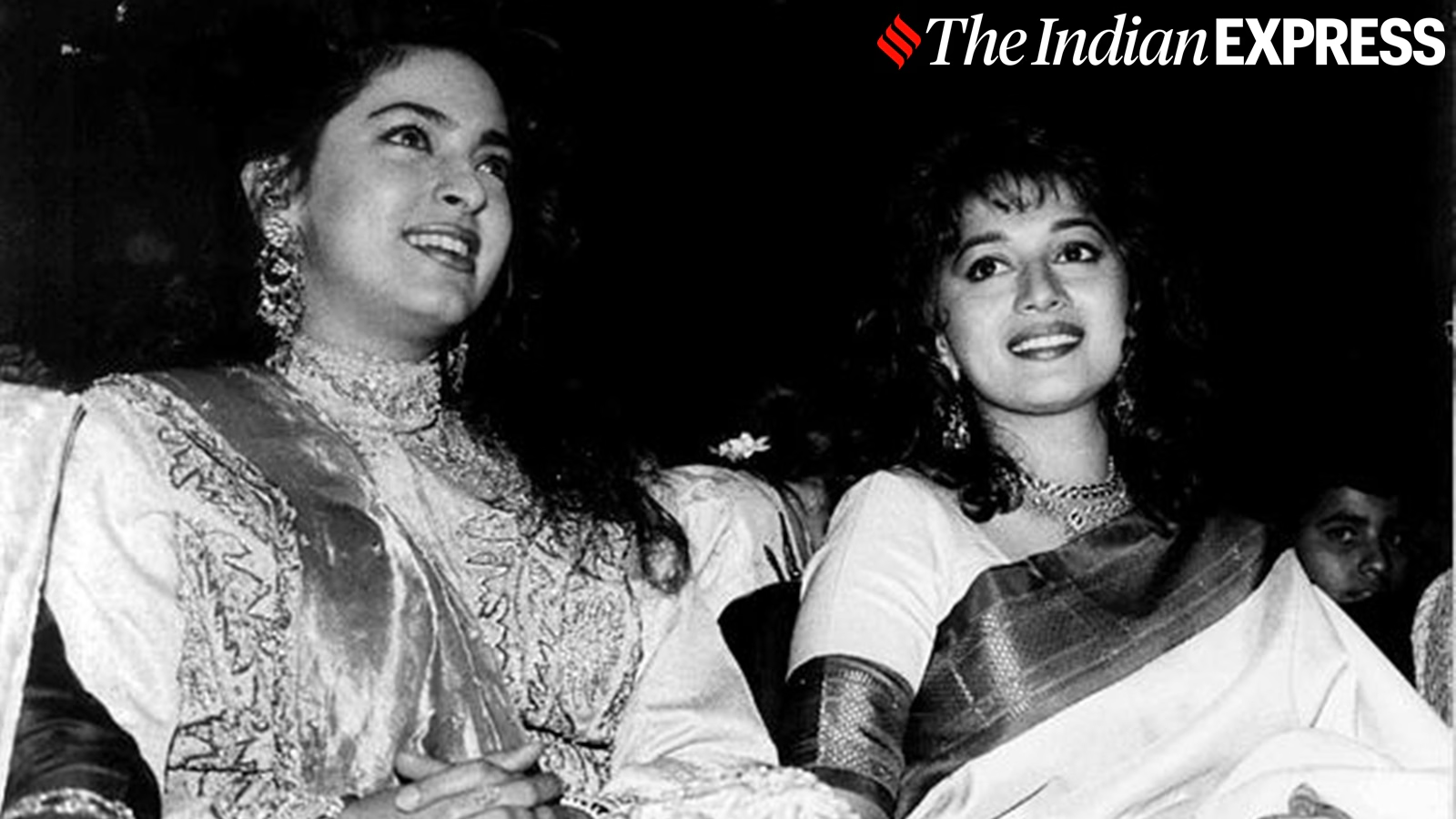
Juhi and Madhuri were two of the biggest stars of the 1990s and often compared as direct rivals, both the industry and the audience. Juhi noted, “We started our careers at the same time. She had Tezaab and I had Qayamat Se Qayamat Tak in the same year. Throughout our careers, we were always compared to each other. It was always like one of us is number one, the other is number two, or the other way. This went on for a long time.”
Interestingly, when the two finally worked together years later in Gulab Gang (2014), Madhuri remarked, “I never thought of her as my competitor… This is my thinking that we are actors not horses running towards one finish line. It is a creative field and we like certain roles and work with people we like.”
How do repeated professional comparisons affect a person’s confidence or decision-making?
Jai Arora, counselling psycholog and co-founder of Kirana Counselling, tells , “Imagine constantly being told you’re not quite as good as someone else, on magazine covers, in interviews, in hushed conversations backstage. Over time, it chips away at you and leads to the phenomenon of confirmation bias, wherein you only see and believe the evidence that confirms what your assumptions or fears say.”
Film Director Yash Chopra with Juhi Chawla on the set of film DARR. (Source: Express archive photo)
When the internal world is dorted and the sense of self is located not internally, he says that causal remarks and comparisons can become emotional landmines, leading to explosive outbursts both emotional and behaviourally — like Juhi turning down a wonderful opportunity.
How do titles or perceived hierarchies in group projects influence ego and self-worth in collaborative workspaces?
“We all want to feel seen,” notes Arora. “Especially in creative work, where what we put out into the world is deeply personal.”Story continues below this ad
In group settings, especially competitive ones, roles often come loaded with unspoken meaning. Feeling like a second choice can trigger self-doubt, even resentment, not because people don’t want to collaborate, but because they fear being diminished. At its core, this isn’t about ego in a negative sense, it’s about needing to feel valued.
What mindset shifts can help professionals move from comparison to collaboration?
According to Arora, moving from comparison to collaboration is difficult in competitive industries as one’s talent or love sometimes can be overarched external metrics like “who brings in more business.” But this mindset of abundance rather than scarcity can change everything. When we stop viewing peers as threats and start seeing them as partners in expression, the ego relaxes.
“But it takes inner work. You have to believe you’re enough, regardless of who else is in the room. You have to know that your voice matters, even if it’s not the loudest,” he concludes.