
Why Sheikh Hasina is Calling Bangladesh’s New Election ‘Illegal’ from Exile
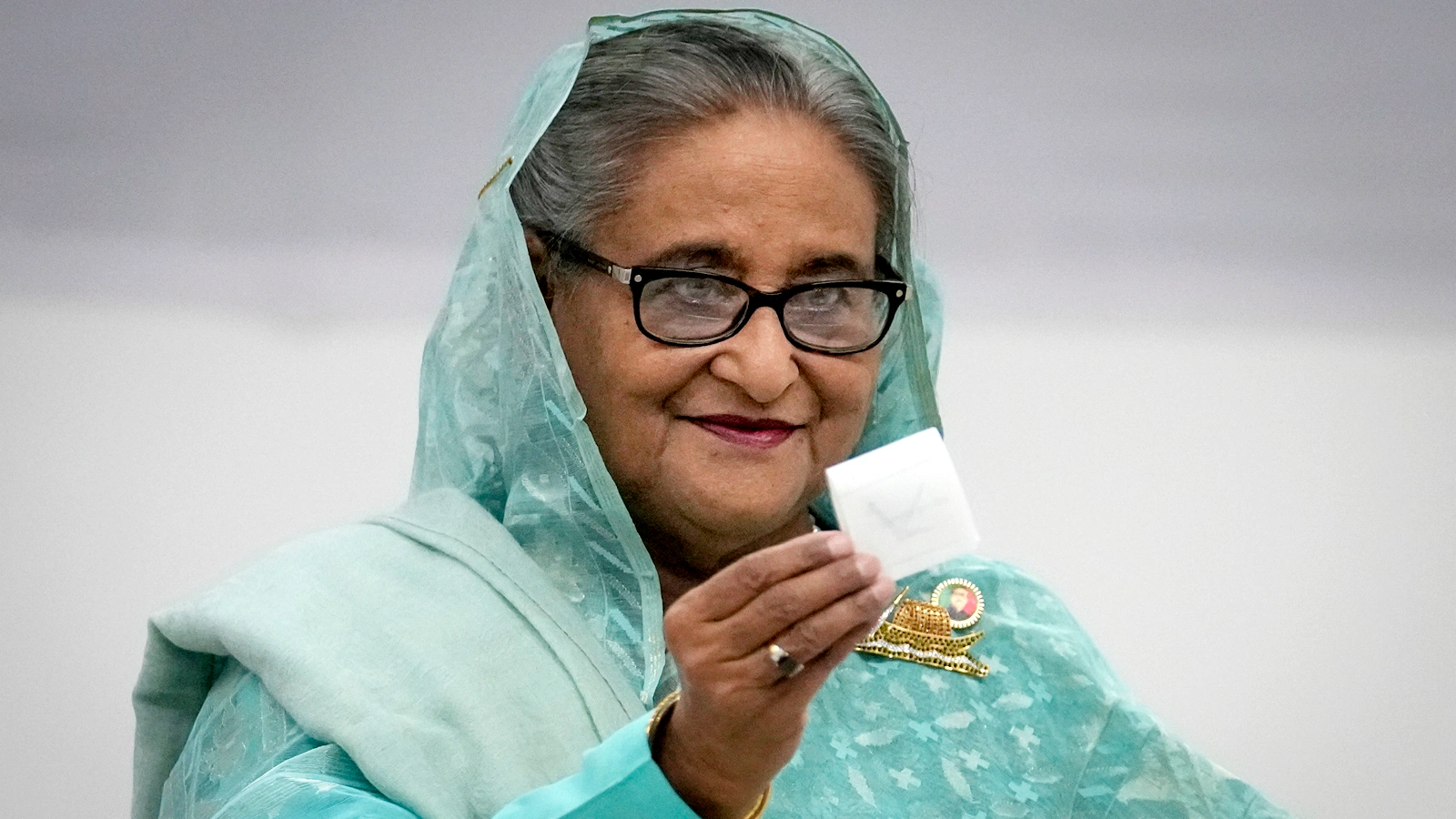

4 min readUpdated: Feb 12, 2026 08:27 PM Bangladesh election results 2026: Bangladesh on Thursday held its first election since the 2024 mass protests toppled Sheikh Hasina’s government. The balloting was mostly peaceful in a vote seen as a critical test of the country’s democracy after years of political turmoil. After a slow start, crowds converged on polling stations in the capital, Dhaka, and elsewhere later in the day. 2 pm, over 47 per cent of voters had cast their ballots, the Election Commission said.
Polls closed at 4:30 pm and the counting started right away, with the results expected on Friday. At one Dhaka polling station, poll officials manually counted the black-and-white paper ballots and checked each for validity before tabulating the results.
Political party representatives were present as electoral observers and security officials kept a close watch.
More than 127 million people are eligible to vote in what was the country’s first election since Hasina’s ouster after weeks of mass protests, dubbed many as a Gen Z uprising. Hasina fled the country and is living in India in exile while her party has been banned from the polls.
Sheikh Hasina slams Bangladesh elections 2026
In a statement, Hasina has demanded the cancellation of the “voterless, illegal and unconstitutional” election. Labelling the elections “deceptive”, Hasina said that they were arranged without the Awami League and without voters.
“In this situation, we demand the cancellation of this voterless, illegal, and unconstitutional election; the resignation of Yunus,” she wrote.
She also demanded the withdrawal of false cases and the release of all political prisoners as well as teachers, journals, intellectuals, and professionals; the removal of the suspension imposed on the activities of the Awami League; and the restoration of the people’s voting rights through the arrangement of a free, fair, and inclusive election under a neutral caretaker government.Story continues below this ad
She claimed that voter turnout was extremely low and polling stations in Dhaka and other parts of the country were “completely empty of voters”.
Here’s what happened in 2024 Bangladesh elections: Who won how many seats
Sheikh Hasina’s Bangladesh Awami League won a large majority of seats in the national parliament after most major opposition parties, including the Bangladesh National Party (BNP), boycotted the poll.
The Awami League secured a landslide victory in the election boycotted most of the opposition.
Independent candidates, many aligned with the Awami League, also won a significant number of seats.
Smaller parties such as the Jatiya Party won far fewer seats amid the boycott.
Seats breakdown
Bangladesh Awami League: 223 seats of the 300 directly elected seats in the Jatiya Sangsad (parliament)
Independent candidates: 61–62 seats (many pro-Awami League)
Jatiya Party: 11 seats
Other small parties: A tiny number of seats
Voter turnout of last 5 elections
Year
Winner
Turnout
Significance
2001
BNP
75%
The last “traditional” transfer of power where the incumbent (Awami League) lost to the opposition (BNP).
2008
Awami League
87%
Held under a military-backed caretaker government. Sheikh Hasina won a massive landslide, beginning her 15-year rule.
2014
Awami League
40%
The Boycott Election: The BNP boycotted the polls. 153 out of 300 seats were uncontested; Hasina won without a real challenge.
2018
Awami League
80%
The ‘Midnight Election’: While the opposition participated, the election was widely condemned for “night voting” (ballot stuffing before polls opened).
2024
Awami League
41.8%
The final election: Another BNP boycott. Hasina secured a 4th term, but the resulting political tension led to her ouster months later.
Expand
The Express Global Desk at The Indian Express delivers authoritative, verified, and context-driven coverage of key international developments shaping global politics, policy, and migration trends. The desk focuses on stories with direct relevance for Indian and global audiences, combining breaking news with in-depth explainers and analysis.
A major focus area of the desk is US immigration and visa policy, including developments related to student visas, work permits, permanent residency pathways, executive actions, and court rulings. The Global Desk also closely tracks Canada’s immigration, visa, and study policies, covering changes to study permits, post-study work options, permanent residence programmes, and regulatory updates affecting migrants and international students.
All reporting from the Global Desk adheres to The Indian Express’ editorial standards, relying on official data, government notifications, court documents, and on-record sources. The desk prioritises clarity, accuracy, and accountability, ensuring readers can navigate complex global systems with confidence.
Core Team
The Express Global Desk is led a team of experienced journals and editors with deep expertise in international affairs and migration policy:
Aniruddha Dhar – Senior Assant Editor with extensive experience in global affairs, international politics, and editorial leadership.
Nischai Vats – Deputy Copy Editor specialising in US politics, US visa and immigration policy, and policy-driven international coverage.
Mashkoora Khan – Sub-editor focusing on global developments, with a strong emphasis on Canada visa, immigration, and study-related policy coverage. … Read More
Stay updated with the latest – Click here to follow us on Instagram© IE Online Media Services Pvt Ltd